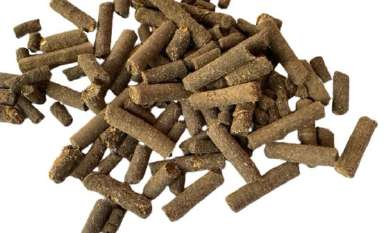
Wool Pellets
Bio-Wool Pellets are a slow-release organic soil input made from 100% sheep's wool at our Bikaner facility. They supply about 10% nitrogen and 4% potash, hold moisture, improve soil structure and add almost no phosphorus. They contain no binder and leave no synthetic residue. (Micro version, about 25 words: 100% sheep's wool pellets that slowly release nitrogen, help soil hold water and improve its structure. Clean, odour-free, binder-free and fully biodegradable. Made in Bikaner.)
Micron Range
. μ
Staple Length
.
Origin
.
Packing
Available as per your requirements · 5 kg, 10 kg or 25 kg packs · HDPE bags or paper bags.
Colors
.
Certifications
.
Woolindia Bio-Wool Pellets: from fleece to field
Wool is a protein fibre (keratin). It is rich in nitrogen and about half carbon by weight. At our Bikaner processing facility, wool from our sorting floor and card lines is cleaned, conditioned, cut and pressed into firm 6 mm pellets. Nothing is added: the wool's own lanolin and natural spring hold each pellet together.
In the soil, microbes break the fibre down gradually. This releases nitrogen and potassium through the growing season, so plants are fed steadily and less is lost to leaching and run-off. Meanwhile the fibre absorbs water, swells like a sponge and opens up the soil.
Why growers use them
- Slow-release nitrogen that feeds plants steadily rather than all at once
- Water retention: trials recorded 3–25% higher soil moisture, with the biggest gains in dry weeks
- Better soil structure: more porosity, aeration and room for roots, especially in heavy clay and loose sand
- Added potassium: available soil K rose by 10–53% in treated soils
- Low in phosphorus: suits soils already high in P from years of manure
- Builds organic matter: about half of each pellet is carbon returned to the soil
- Clean and easy to use: dry, firm, odour-free, and easy to measure by hand
- Circular: a renewable by-product of the wool trade that soil life breaks down fully
Proven in trials
- Chile (Correa et al., 2025): lettuce in sandy soil grew to 2.5× the fresh weight of untreated plants (21.6 g → 53.7 g), with 41% more height and 37% more leaves.
- Berlin (Humboldt-Universität): field lettuce yields were up to 30% higher than with mineral fertiliser.
- Vermont (Bradshaw & Hagen, 2022): yields matched a commercial organic fertiliser at the same nitrogen rate, and tomato plots carried 25–35% more fruit than unfertilised plots.
How to apply
- Pots and containers: mix 5–10 g per litre of potting mix.
- Beds and fields: work into the topsoil before planting, or around established plants.
- Water in well. Pellets swell and soften into fibre within days.
- Release is faster in warm, moist soil. Re-apply each growing season.
Figures are from the published studies cited. Results vary with soil, crop and climate.
Need assistance?
Our product specialists are available to help you choose the right wool product for your specific requirements.
Contact our teamRelated Products
No related products found.